
Misdemeanor & Student Defense Lawyer

A relatively minor criminal charge can have consequences far beyond the potential sentence, particularly for a college student or someone who has never been in trouble before. Winn Law, P.C. represents students, first-time offenders, and others charged with misdemeanor and lower-level criminal offenses throughout Massachusetts.
Massachusetts Misdemeanor Defense
Not every criminal case involves the possibility of a lengthy prison sentence. But that does not mean a misdemeanor charge should be treated casually.
Facing a first-time charge or a student's criminal case? Call (857) 415-2415 for a free, confidential assessment, or send a message below.
An arraignment creates a Massachusetts court record, and even a case that is eventually dismissed can create problems involving employment, professional licensing, education, immigration, or reputation. For someone with no prior criminal history, avoiding a conviction—and where possible preventing a criminal complaint from issuing or avoiding arraignment altogether—can be particularly important.
Common misdemeanor cases may include shoplifting, disturbing the peace, disorderly conduct, motor vehicle offenses including OUI / DUI, trespassing, minor property offenses, assault and battery, and other lower-level criminal allegations.
The appropriate defense depends on the particular charge and evidence. Some cases should be contested because the Commonwealth cannot prove the offense. Others may present an opportunity for dismissal, diversion, pretrial resolution, or another disposition designed to avoid a conviction or arraignment.
Criminal Defense for College Students
A criminal allegation can create additional problems when the accused is a college or university student.
The criminal case may proceed at the same time as a separate disciplinary process through the student’s school. Depending on the allegation and institution, a student may face interim restrictions, loss of campus housing, suspension, disciplinary probation, or other academic consequences even before the criminal case has been resolved.
Statements made in one proceeding can also affect another. A student deciding how to respond to a school investigation should therefore consider the existence of the criminal case before providing statements or evidence concerning the allegations.
Winn Law represents college and university students charged with criminal offenses in Massachusetts and approaches these cases with attention to both the immediate criminal allegations and the consequences a criminal case can have on a student’s education and future.
First-Time Offenders
For someone with little or no criminal record, the most important question is often not simply what punishment a particular charge carries. It is whether the case can be resolved without leaving the person with a criminal record or criminal conviction.
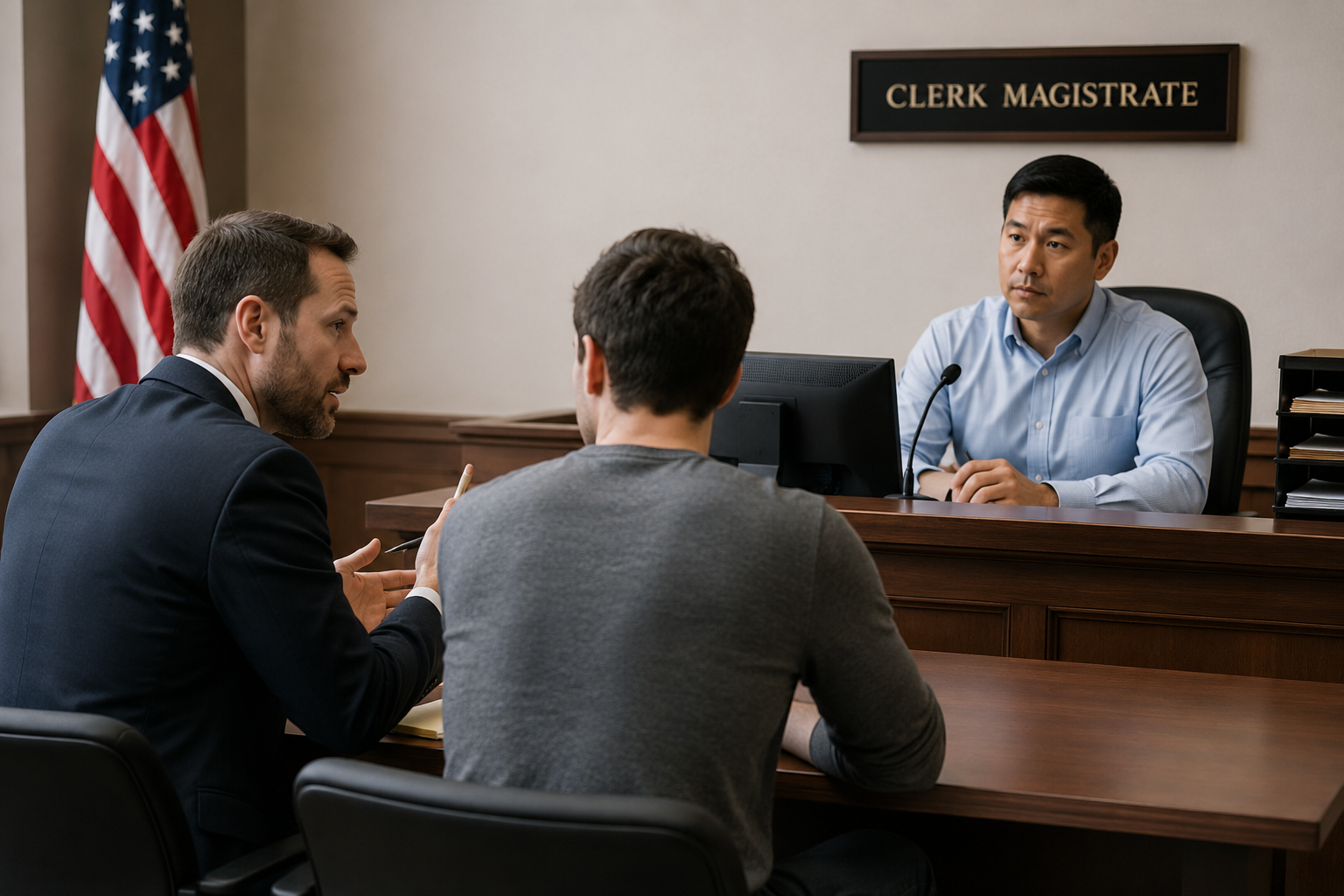
Massachusetts criminal cases can sometimes be resolved through dismissal, diversion, pretrial probation, a continuance without a finding, or other dispositions depending on the charge, the person’s history, and the circumstances of the case. In appropriate cases that begin with an application for a criminal complaint, representation at a Clerk-Magistrate hearing may provide an opportunity to prevent the complaint from issuing in the first place. It is also possible, at times, to convince the prosecutor to simply delay or abandon an arraignment in the interests of justice. As a prosecutor, Attorney Winn understood that one of the most important functions of a good District Attorney is recognizing the individuals who do not need to become ensnared in the criminal justice system and providing them with a fair opportunity to avoid the long-term consequences of a criminal record.
A Minor Charge Can Still Have Major Consequences
A criminal allegation that looks relatively minor on paper can have an outsized effect on someone who is starting a career, applying to graduate school, pursuing a professional license, or simply has no previous involvement with the criminal justice system.
That makes the objective of the defense particularly important. The strategy should account not only for the potential sentence, but also for whether the charge can be defeated, dismissed, resolved without a conviction, or prevented from becoming a criminal case at all.
Direct Representation by Attorney Patrick Winn
Winn Law is a solo criminal defense practice. Clients work directly with Attorney Patrick M. Winn in reviewing the evidence, evaluating the consequences of the charge, developing a defense, and determining the best available path toward resolving the case.
For a free and confidential consultation concerning a misdemeanor charge, student criminal case, or first-time offense in Massachusetts, contact Winn Law, P.C. at (857) 415-2415.
Structuring case outcomes to avoid a permanent record.
There are a number of misdemeanor crimes that Massachusetts courts tend to be lenient with, particularly when the defendant has a limited criminal history. These petty crimes include:
It is extremely important to retain an attorney before arraignment on charges like these. Although the charges carry very little chance of committed time, they will appear on your criminal record permanently as soon as you are arraigned. A good defense attorney can often persuade the District Attorney to “divert” your case before formal arraignment—particularly if you are a student, in the military, have no prior record, or are otherwise gainfully employed. This is called a “diversion program” and every county in Massachusetts uses some form of it. A diversion program usually requires the individual complete community service, anger management or counselling within a specified period of time (usually six months). If you comply with the conditions, your case will be dismissed prior to arraignment. Because arraignment is where the criminal process begins, an individual who completes “diversion” is never formally charged, and therefore has a clean record with no criminal entries.
As a prosecutor, Attorney Winn understood that one of the most important functions of a good District Attorney is recognizing the individuals who do not need to be ensnared in the criminal justice system, and providing them a fair way to avoid the long term consequences of a record.
Our Services






Get in Touch
Over 50 five-star reviews on Avvo. For a free, confidential case assessment, tell us briefly what happened and how to reach you using the form below, or call (857) 415-2415
.svg)

.svg)
