
OUI in a Parked Car in Massachusetts? | Winn Law
Can You Get an OUI in a Parked Car in Massachusetts?
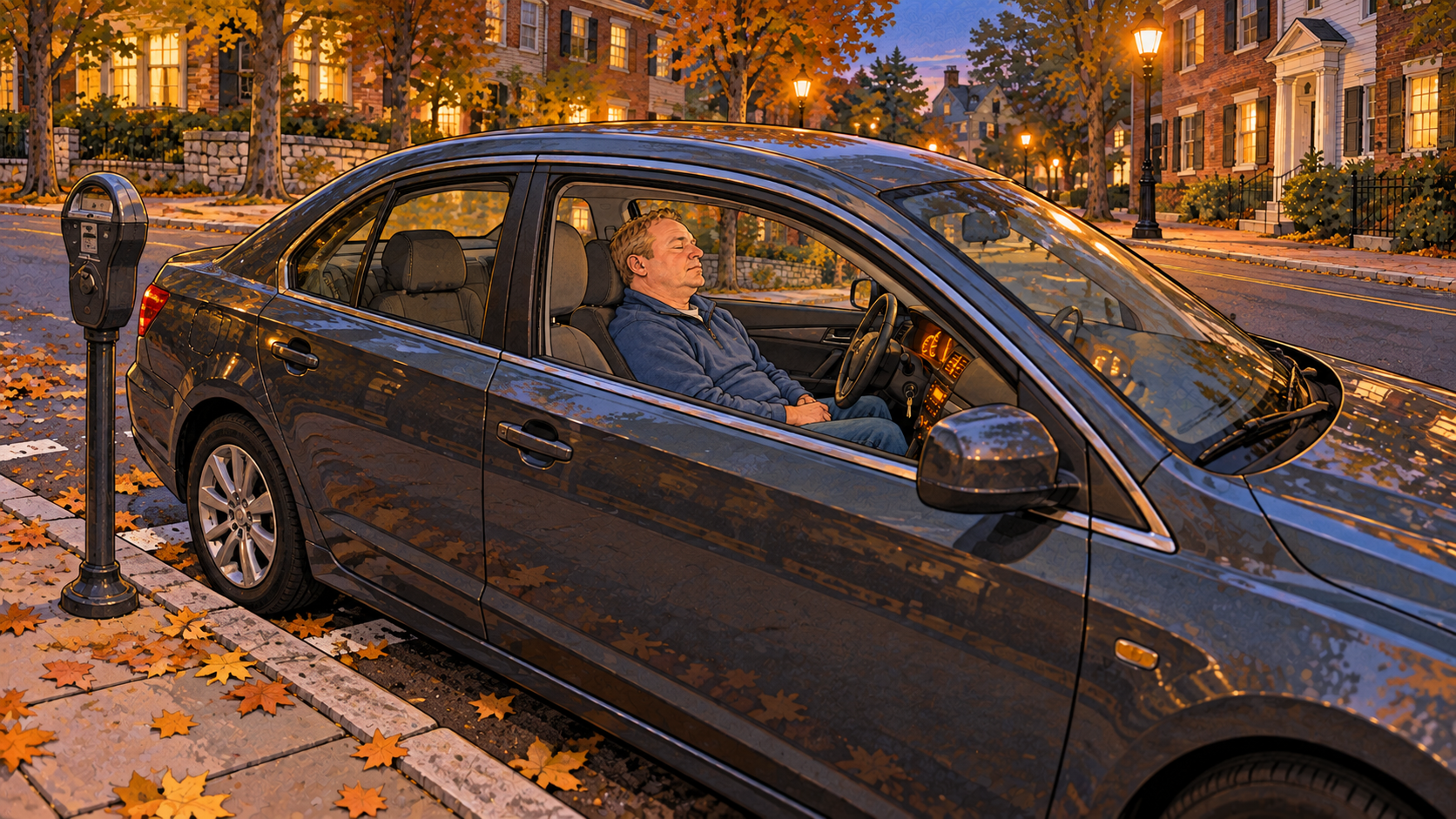
You have had too much to drink and decide to sleep in your car instead of driving home. You leave the engine running for heat, or turn the key to listen to the radio. The car never moves.
Can you still get an OUI in Massachusetts without driving? Yes. “Operation” means more than driving. Even turning the ignition key far enough to activate the car’s electrical system can support an OUI conviction.
But sitting behind the wheel does not automatically prove operation. Who started the car, what you did, and when you became impaired can all matter.
What counts as “operation” under Massachusetts OUI law?
Operation includes intentionally using a vehicle’s controls, while inside it, to activate its power or take a step in that process. The rule comes from Commonwealth v. Uski, 263 Mass. 22, 24 (1928).
Put simply: turning the ignition key can count, even if the engine never starts and the car never moves. Commonwealth v. McGillivary, 78 Mass. App. Ct. 644, 646–650 (2011).
That is why an operating under the influence charge—commonly called OUI, DUI, or drunk driving—can involve a parked car. Location also matters: the Commonwealth must prove that the operation happened on a public road or another place covered by the law’s public-access requirements. G. L. c. 90, § 24(1)(a)(1).
Can you get a DUI for sleeping in your car in Massachusetts?
Yes. “I was sleeping it off” may explain your decision, but it does not necessarily defeat the charge.
In Commonwealth v. Sudderth, police found a man asleep in a reclined driver’s seat in Brighton. His car was legally parked on a public street, with the key in the ignition and the engine running.
The Appeals Court upheld his conviction. The Commonwealth did not need to prove that he was impaired when he drove to that spot. It could establish operation while he remained parked.
Sleeping behind the wheel with the engine running can support an OUI conviction, even when the car is legally parked. Commonwealth v. Sudderth, 37 Mass. App. Ct. 317, 318–321 (1994).
Can you get an OUI with the engine off?
Yes. That alone does not defeat the charge.
In McGillivary, police found the defendant asleep over the steering wheel, holding a roast beef sandwich. The engine was off, but the dashboard was illuminated and the ignition key was turned to “on.”
Turning the key supported a finding of operation because it was one step in the starting sequence. There was no evidence that he had driven drunk before parking. Commonwealth v. McGillivary, 78 Mass. App. Ct. 644, 645–650 (2011).
The Supreme Judicial Court reaffirmed this rule in 2025. In Commonwealth v. Wurtzberger, the defendant was behind the wheel of a parked rental van. The engine was off, but the key was in the ignition and the radio was on.
The jury could infer that he had intentionally turned the key. His impairment behind the wheel while the key remained turned supported the conviction. The Commonwealth did not have to prove impairment when he last moved the van. Commonwealth v. Wurtzberger, 496 Mass. 203, 206–209 (2025).
Is sitting in the driver’s seat enough to prove OUI?
Not automatically. Who activated the vehicle matters.
In Commonwealth v. Plowman, police found the defendant asleep behind the wheel with the engine running. According to the defense, a woman had driven home and left the engine on. When she tried to leave again, the defendant moved her into the passenger seat and sat behind the wheel to stop her from driving drunk. They eventually fell asleep.
The judge effectively told the jury that sitting behind the wheel with the keys in the ignition established operation. The Appeals Court ordered a new trial because the instruction prevented proper consideration of his defense.
The jury was allowed to find operation. It could not be told that it had to. The Commonwealth still had to prove its case beyond a reasonable doubt. Commonwealth v. Plowman, 28 Mass. App. Ct. 230, 231–235 (1990).
What if you drank after parking the car?
Timing matters. When the charge is based on impairment, the Commonwealth must prove that you operated while alcohol affected your ability to drive safely. The law also permits an OUI conviction based on a blood alcohol level of 0.08% or higher while operating. G. L. c. 90, § 24(1)(a)(1).
In Commonwealth v. Cavallaro, the defendant testified that he parked at a service station, shut off his truck, and later drank beer while talking with the attendant inside. The officer said the engine was running; the defendant disagreed.
There was no evidence supporting a reasonable inference that he was impaired before arriving. The Appeals Court reversed because the instructions did not adequately explain whether his extended visit was still part of the driving trip or whether operation had ended.
The court ordered a new trial. It did not create a blanket exception for drinking in a parked car. Commonwealth v. Cavallaro, 25 Mass. App. Ct. 605, 606–611 (1988).
There is another limit: if you turn the ignition key while sober and then become impaired while remaining behind the wheel with the key turned, operation can continue throughout that period. Commonwealth v. Wurtzberger, 496 Mass. 203, 208–209 (2025).
How a Massachusetts OUI defense lawyer challenges operation
In a parked-car OUI case, I look beyond where the officer found the client. Who drove? Who turned the key? What was running? What does the video show? Does a witness explain what happened before police arrived?
I also examine when the drinking occurred and whether the jury instructions properly address the defense.
“I wasn’t driving” starts the discussion. The next question is what the Commonwealth can actually prove.
OUI and DUI defense in Woburn, Boston, and MetroWest
I represent clients facing Massachusetts OUI and DUI charges, including cases in Woburn and Boston and clients from Newton, Wellesley, and throughout MetroWest.
If you were arrested for OUI in a parked car or have questions about a drunk driving charge, contact Winn Law, P.C. for a free consultation. We can discuss the evidence, your defense options, and the cost of representation.
From the Blog



Get in Touch
Over 50 five-star reviews on Avvo. For a free, confidential case assessment, tell us briefly what happened and how to reach you using the form below, or call (857) 415-2415
.svg)

.svg)
