
Boston Fake ID Lawyer: RMV Forgery & BMC Central Clerk Hearings
By Attorney Patrick M. Winn
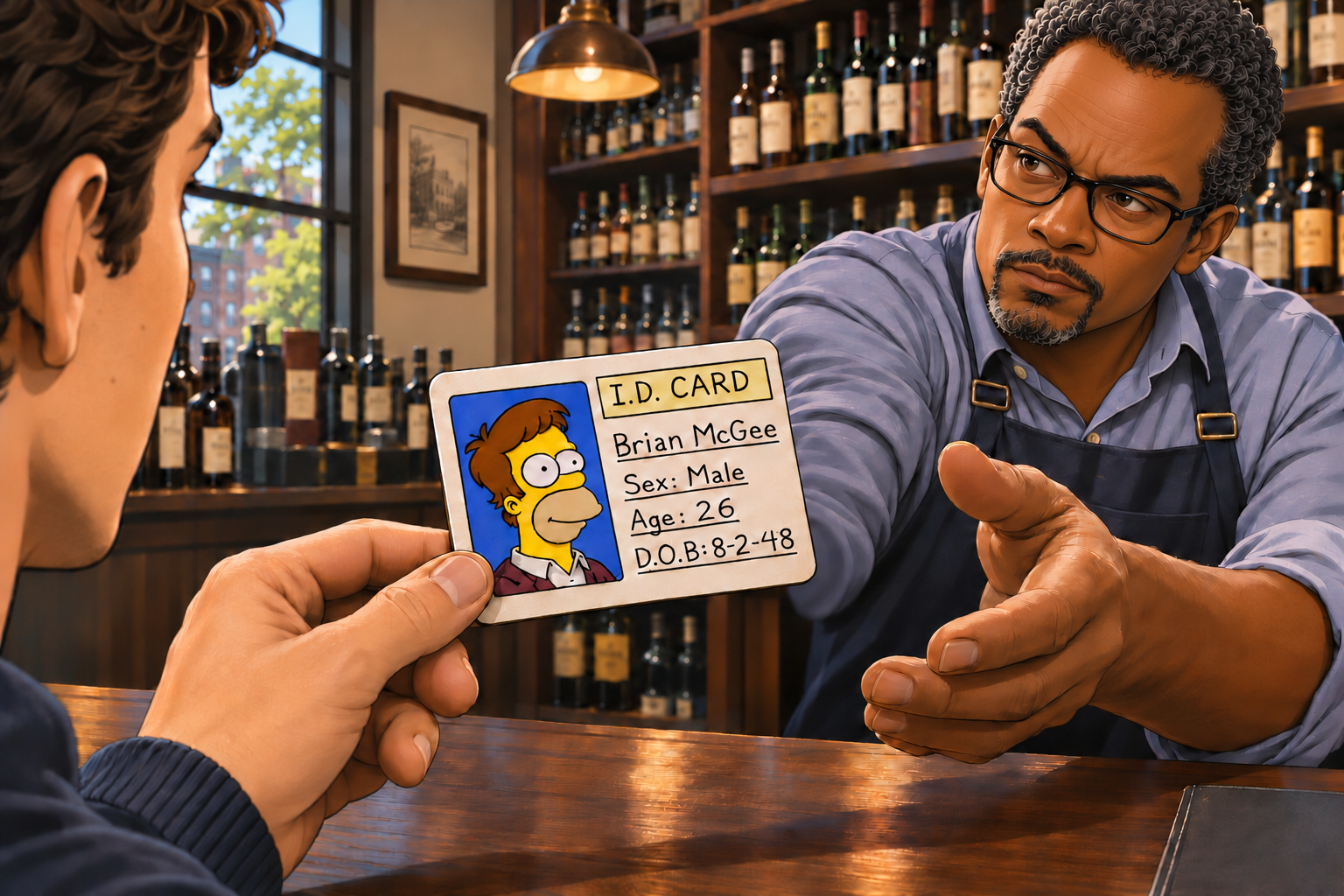
A fake ID is confiscated at a Boston bar, club, or liquor store—or at a sports arena like TD Garden during a Celtics or Bruins game. You go home. Later, a notice arrives directing you to appear at a clerk-magistrate hearing. The allegation on the paperwork may say something considerably more serious than “fake ID”: forgery or misuse of an RMV document.
If your notice lists BMC Central and G.L. c. 90, § 24B, take it seriously. The ordinary forgery or possession charge under that statute is a felony. But a notice of a clerk-magistrate hearing is not a conviction, and it is not the same as a summons for arraignment. There may still be an opportunity to prevent a criminal complaint from issuing.
That is where I want to get involved. The objective is to address the evidence and the available options before the allegation becomes a criminal prosecution.
Have a Boston fake ID clerk hearing? Call me at (857) 415-2415 or contact Winn Law, P.C. for a free, confidential consultation. Have your hearing notice available when we speak.
What does “RMV document, forge/misuse” mean?
People searching for “forgery of an RMV document” or “misuse of an RMV document” are often trying to understand the charge printed on their court notice. Massachusetts complaint terminology distinguishes “RMV DOCUMENT, FORGE/MISUSE” from “RMV DOCUMENT, POSSESS/USE FALSE/STOLEN.” Both can arise under G.L. c. 90, § 24B, but they do not describe identical conduct.
The statute covers several forms of conduct involving specified motor vehicle documents, including making or altering a false license, helping another person do so, and possessing or using certain false or stolen documents. The Massachusetts complaint manual separates the charge formulations.
That distinction matters. I want to know whether police are accusing you of creating the ID, possessing it, presenting it, or helping someone else. I also want to see the document itself. A counterfeit license, a borrowed genuine license, and a different type of identification require separate analysis. An ID described as “fake” in a police report does not answer every legal question.
Boston fake ID sweeps and underage drinking investigations
Underage drinking enforcement can bring police into bars and other licensed establishments to check identification. A confiscated ID can lead to an investigation and an application for a criminal complaint. The fact that you were allowed to leave does not necessarily mean the matter is over.
Boston license inspections have resulted in documented underage drinking violations, including an October 2025 inspection discussed in reporting about an Allston bar’s licensing proceedings. The business’s liquor-license case and an individual’s criminal complaint application are separate matters.
If your paperwork refers to a Boston Police licensed-premises investigation, a bar sweep, or a confiscated fraudulent driver’s license, the useful starting point is the actual report. Who recovered the ID? Who allegedly presented it? Was the person identified at the scene? Was the application based on an officer’s observations or information supplied later?
A successful fake ID hearing at BMC Central
I represented a client at the Boston Municipal Court, Central Division in a matter involving a fake ID that had been used by a friend. The complaint application alleged forgery or misuse of an RMV document.
At the hearing, probable cause was found. I argued that bringing a criminal case was unwarranted in the circumstances, including the client’s education, employment, family support, and the disproportionate effect a prosecution could have on his life. No criminal complaint issued, and the client avoided arraignment. The result is described on my RMV-document case results page.
The practical lesson is that the hearing deserves preparation even when the police report contains damaging allegations. A favorable result in one case does not guarantee the same result in another.
What if a friend used my fake ID and I was not in Boston?
That fact can be important. It does not automatically resolve the case.
I would examine what evidence connects you to the document and to the conduct alleged. Were you present? Did you possess the ID earlier? Did you know the friend had it? What did anyone actually say to police? Does the report distinguish the person whose information appears on the card from the person who presented it?
The defense needs to address the particular charge. Showing that someone else used the ID may undermine an allegation that you personally presented it, while leaving a separate possession allegation to be examined. Conversely, a name or photograph on a card should not be treated as a substitute for examining the evidence of the accused person’s conduct.
Preserve relevant messages and other records. Do not delete material or ask a friend to adopt a particular account. Let your lawyer evaluate the evidence before deciding whether a statement or witness testimony will help.
What happens at a BMC Central fake ID clerk-magistrate hearing?
A clerk-magistrate hearing, also called a show cause hearing, addresses whether a criminal complaint should issue. The police present the basis for the application, and the defense can challenge whether the evidence establishes probable cause.
Probable cause is a lower standard than proof beyond a reasonable doubt at trial. Preparation therefore requires more than identifying an argument that might eventually persuade a jury. I want to identify missing elements, unsupported assumptions, identification problems, and any appropriate avenue for resolving the application without prosecution.
I also prepare the information that explains the person behind the allegation: school, employment, responsibilities, prior record, and other relevant circumstances.
Can the clerk decline a felony complaint if there is probable cause?
Yes, in appropriate circumstances, but the prosecutor’s position matters. For a felony complaint sought by police, the general rule is that the clerk must issue the complaint if probable cause exists unless the prosecutor opposes issuance. If the prosecutor has communicated a decision to prosecute a legally valid complaint, the clerk cannot override that decision.
The Supreme Judicial Court has also recognized an important qualification: when the prosecutor has not communicated a decision to proceed, the clerk may decline the complaint upon determining that prosecution is unlikely, potentially after discussing the matter with a prosecutor. See Boston Globe Media Partners, LLC v. Chief Justice of the Trial Court, 483 Mass. 80, 86 & n.10 (2019).
In a fake ID case involving someone with no criminal record, the limited nature of the allegations and the person’s circumstances can support an argument that the prosecutor would not pursue the case and that no complaint should issue. In an appropriate case, the clerk may reach that conclusion without an express statement from the prosecutor. A clean record alone does not establish it. I prepare the facts supporting that outcome and address the prosecutor’s position where needed.
Is a fake ID a felony in Massachusetts? Can I lose my license?
The usual § 24B forgery or possession offense carries a possible state-prison sentence, making it a felony. Its maximum penalties include five years in state prison, two years in jail or a house of correction, or a $500 fine. These are statutory alternatives and maximums, not a prediction of the outcome of a first-offense case.
A conviction under § 24B also triggers a one-year license or right-to-operate suspension. Separate RMV administrative action can raise additional issues, so I want to review any Registry notice as well as the court papers.
Not every fake ID allegation is charged under § 24B. Alcohol-related false-identification conduct can implicate G.L. c. 138, § 34B, and other charges may arise from an alleged purchase or possession of alcohol. The exact statute matters. Do not assume that a penalty you found online for a different fake ID offense applies to your notice.
Which Boston court will handle the hearing?
BMC Central is the primary focus of this article. The Central Division of the Boston Municipal Court is at the Edward W. Brooke Courthouse, 24 New Chardon Street, Boston. Its territory includes Downtown Boston, Chinatown, the North End, the West End, Beacon Hill, and the South End through Massachusetts Avenue.
Not every Boston fake ID case goes to Central. Depending on the location of the alleged incident, a case may proceed in another BMC division, including Brighton, South Boston, Roxbury, Dorchester, East Boston, Charlestown, or West Roxbury. Nearby matters may proceed in courts such as Cambridge, Somerville, Brookline, Newton, or Quincy District Court.
I represent clients facing fake ID and clerk-magistrate matters in Boston and surrounding courts. Your school or home address does not, by itself, determine where you appear. Follow the court and instructions on your notice and confirm any uncertainty before the hearing date.
How do I get the police report for a clerk-magistrate hearing?
Start with the clerk’s office listed on your hearing notice. Ask how you or your attorney can obtain the application for criminal complaint and the supporting police report before the hearing. Have the application number ready and follow the court’s identification requirements. Your attorney can also request available records from the police department that filed the application.
District/Municipal Courts Rule 2 requires the clerk to obtain any police report relating to the alleged crime before issuing a complaint on a police application. Getting the paperwork early helps us identify what conduct is actually alleged and what evidence connects you to it.
Why did I receive a fake ID hearing notice after the incident?
A notice may arrive after the ID was confiscated. Read it carefully: the alleged offense date, the application date, and the hearing date serve different purposes. Do not assume that a date on the paperwork tells you when police say you personally entered a bar or liquor store.
If the notice says “RMV document forgery or misuse,” obtain the report before guessing what happened. The defense may need to examine who presented the identification, how police connected it to you, and whether the allegation concerns possession, use, or making a false document. Preserve messages and other records while those questions are being investigated.
What should I do after receiving a fake ID hearing notice?
- Save the entire notice. The court, hearing date, application number, charge description, and statute all matter.
- Get advice before making further statements. An attempt to explain the incident can supply evidence relevant to a different charge.
- Preserve evidence promptly. Messages, photographs, receipts, and potential video may help establish who had the ID and what happened.
- Bring any RMV correspondence. A court hearing does not automatically address a separate license issue.
- Prepare before the hearing. There may be evidence to obtain and discussions to have before the application is considered.
Will a fake ID clerk hearing go on my criminal record?
A complaint application is different from an arraigned criminal case. Preventing a complaint from issuing can avoid the arraignment and resulting criminal-case entry that would otherwise follow. It does not mean that every police, court-application, RMV, or school record disappears. Any disclosure question should be reviewed according to its actual wording.
For a college student or someone beginning a career, preventing prosecution can be especially valuable. I discuss those concerns further on my student defense page.
Speak with a Boston fake ID and clerk-magistrate hearing lawyer
If you are looking for a Boston fake ID lawyer because you received a BMC Central clerk-magistrate hearing notice, I can review the allegation and explain what can be done before the hearing. I am a former prosecutor, and when you hire Winn Law, you work directly with me.
The first conversation should leave you understanding what police are alleging, what evidence we need, and what the next step should be.
Call Patrick Winn at (857) 415-2415 or send a confidential consultation request. For more about the process, read What Happens at a Clerk-Magistrate Hearing?
From the Blog




Get in Touch
Over 50 five-star reviews on Avvo. For a free, confidential case assessment, tell us briefly what happened and how to reach you using the form below, or call (857) 415-2415


